


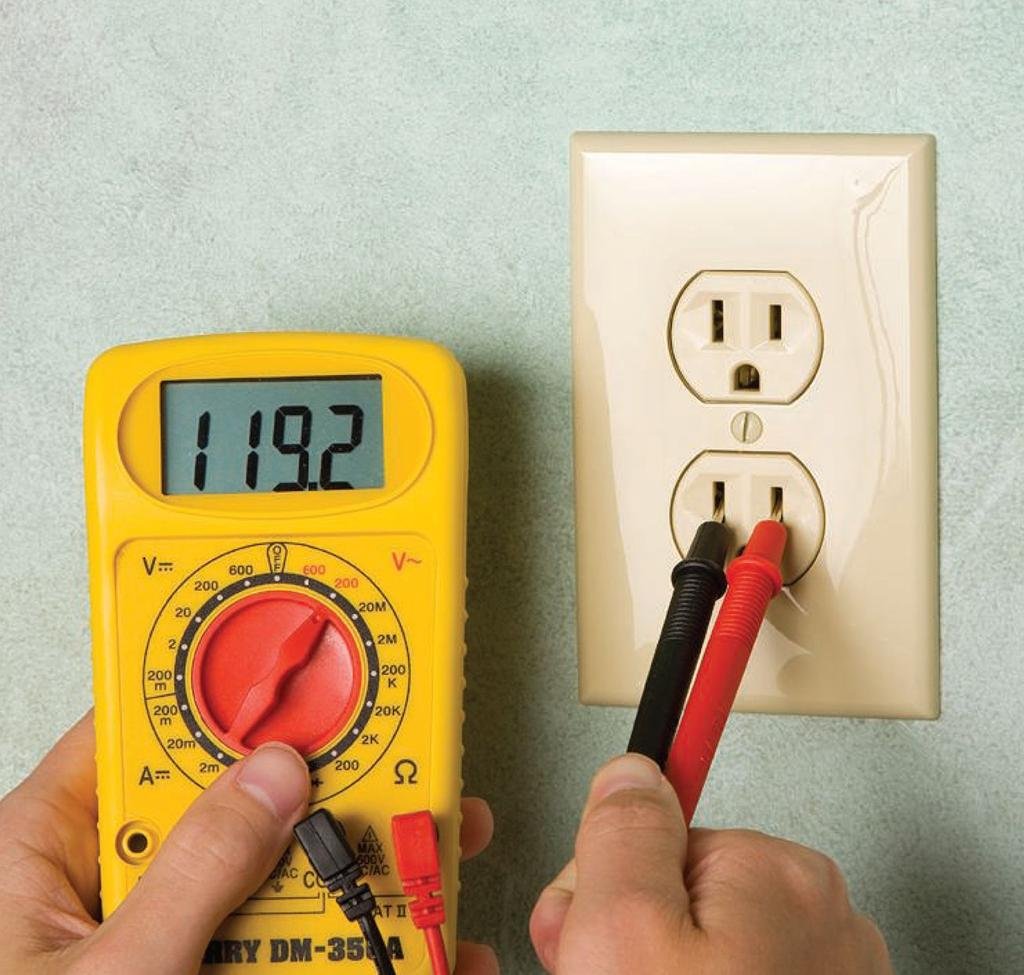
Understanding watts, volts, and amperes makes it easier to choose electrical appliances, calculate power consumption, size inverters, and understand how electricity flows through a circuit. Although these three units are closely related, each measures something different: watts measure power, volts measure electrical potential difference, and amperes measure electric current.
The good news? You do not need an engineering degree to understand the relationship. With a few simple formulas and practical examples, you can calculate electrical power, estimate current requirements, and avoid common mistakes when comparing appliances, batteries, generators, and solar equipment.
This guide explains how watts, volts, and amperes work together, which formulas to use, and how to apply them to everyday electrical problems.
What Are Watts, Volts, and Amperes?
Electricity involves several measurable quantities. The three most commonly used are voltage, current, and power.
Measure electrical pressure
Voltage is the electrical potential difference that drives current through a circuit. A standard household outlet may supply approximately 120 V or 230 V, depending on the country and electrical system.

Amperes (A)
Measure electric current
Current describes how much electric charge passes a point in a circuit per second. A higher current generally requires conductors and protective devices rated to handle that current safely.

Watts (W)
Measure electrical power
Power describes the rate at which electrical energy is transferred or converted into another form, such as heat, light, sound, or mechanical movement.
These measurements answer different questions. Voltage tells you the potential difference, amperage tells you the current flowing, and wattage tells you the rate of power use or delivery.
For example, two appliances may operate at the same voltage but draw different currents because they require different amounts of power.
Watts, Volts, and Amperes Formula
The basic formula connecting watts, volts, and amperes is:
Where:
-
\(P\) = power in watts (W)
-
\(V\) = voltage in volts (V)
-
\(I\) = current in amperes (A)
To calculate any one of these quantities, rearrange the equation.
| What you want to calculate | Formula |
|---|---|
| Watts | \(P = V \times I\) |
| Volts | \(V = P \div I\) |
| Amperes | \(I = P \div V\) |
These equations are especially useful for simple DC circuits and AC circuits with a resistive load or a power factor of 1. For other AC loads, you may need to account for power factor.
Example 1: Calculate Watts From Volts and Amperes
Suppose a device operates at 12 volts and draws 5 amperes.
Using the power formula:
The device uses or receives 60 watts of electrical power under those operating conditions.
Example 2: Calculate Amperes From Watts and Volts
Imagine you have a 1,000-watt appliance connected to a 230-volt supply.
The appliance draws approximately 4.35 amperes, assuming a power factor of 1 and normal rated operation.
Example 3: Calculate Volts From Watts and Amperes
Suppose an electrical device consumes 240 watts while drawing 2 amperes.
The calculated voltage is 120 volts.
These examples show why watts, volts, and amperes should be considered together rather than treated as interchangeable measurements.
Watts, Volts, and Amperes Conversion Chart
A conversion chart helps you estimate current requirements quickly. The following examples use the basic formula \(I=P/V\), assuming a power factor of 1 where applicable.
| Power (Watts) | Current at 12 V | Current at 120 V | Current at 230 V |
|---|---|---|---|
| 60 W | 5.00 A | 0.50 A | 0.26 A |
| 100 W | 8.33 A | 0.83 A | 0.43 A |
| 300 W | 25.00 A | 2.50 A | 1.30 A |
| 500 W | 41.67 A | 4.17 A | 2.17 A |
| 1,000 W | 83.33 A | 8.33 A | 4.35 A |
| 1,500 W | 125.00 A | 12.50 A | 6.52 A |
| 2,000 W | 166.67 A | 16.67 A | 8.70 A |
The table demonstrates an important principle: for the same power, a higher voltage generally means a lower current. This is one reason higher-voltage systems can be advantageous for transferring substantial amounts of power.
However, the figures are mathematical estimates, not automatic recommendations for circuit breakers, wire sizes, or inverter ratings. Actual equipment requirements depend on the type of load, operating conditions, and applicable electrical codes.
How to Calculate Watts From Volts and Amperes in Real Life
The basic power formula is useful in many everyday situations. Here is how it applies to common electrical equipment.
1. Mobile Phone Chargers
A charger rated at 5 V and 2 A has a maximum theoretical output of:
That means the charger can provide up to 10 watts at those specified output conditions. A USB charger with multiple voltage and current profiles may support different power levels depending on the connected device and charging protocol.
2. Solar Panels
Suppose a solar panel has a rated operating voltage of 40 V and a current of 10 A.
Its operating power at those conditions is 400 watts. Actual solar output varies with sunlight intensity, panel temperature, shading, orientation, and system losses.
3. Batteries and Inverters
A 12 V battery connected to an inverter does not automatically supply a fixed wattage. The current draw depends on the load, the inverter’s efficiency, and the battery’s voltage under load.
For example, if an inverter delivers 600 W of AC power at 90% efficiency, its approximate DC input power is:
At a nominal 12 V, the estimated input current is:
In practice, battery voltage may fall under load, causing the current to rise. This is why low-voltage inverters delivering high power need appropriately sized cables, suitable fuses, and batteries capable of supplying the required current.
4. Household Appliances
A 1,500 W electric heater connected to a nominal 120 V supply draws approximately:
This estimate helps you understand the electrical demand of the heater. It does not, by itself, establish whether a particular outlet or circuit can safely support the appliance alongside other loads.
Always check the manufacturer’s instructions and the circuit’s rating before connecting high-power equipment.
Watts vs. Volts vs. Amperes: What Is the Difference?
Although the units are related, they describe separate properties of an electrical system.
| Feature | Watts (W) | Volts (V) | Amperes (A) |
|---|---|---|---|
| Measures | Electrical power | Potential difference | Electric current |
| Symbol | W | V | A |
| Main question | How much power? | What voltage? | How much current? |
| Basic relationship | \(P=VI\) | \(V=P/I\) | \(I=P/V\) |
| Common application | Appliance power ratings | Supply and battery voltage | Circuit and equipment current |
A useful way to remember the difference is to consider a water pipe. Voltage is analogous to water pressure, current to the rate of water flow, and power to the rate at which that flow can perform work.
This analogy is helpful for understanding the relationship, but electricity is not literally water moving through a pipe. Electrical behavior also depends on resistance, impedance, circuit design, and the characteristics of the connected load.
Why Watts and Amperes Are Not the Same
A watt measures power, whereas an ampere measures current. You cannot convert between them accurately without knowing the voltage and, where relevant, the power factor.
For instance, 10 A at 12 V corresponds to 120 W in a simple DC circuit. The same 10 A at 230 V corresponds to 2,300 W under the same idealized assumptions.
The current is identical, but the power is very different.
Why Voltage Matters When Choosing Equipment
An appliance designed for one voltage may not operate correctly on another. Connecting a device to an unsuitable supply can cause malfunction, overheating, or damage.
Before buying a charger, inverter, generator, or electrical appliance, check its input voltage, output voltage where applicable, current rating, and power requirements.
AC vs. DC: Why the Watts Formula Sometimes Needs More Information
The equation \(P=VI\) is straightforward for DC circuits when voltage and current refer to the relevant operating values. It also applies directly to purely resistive AC loads using RMS voltage and current.
For many AC appliances, however, voltage and current do not remain perfectly aligned in their waveforms. Motors, transformers, electronic power supplies, and other equipment may have a power factor below 1.
Single-Phase AC Power Formula
For a single-phase AC circuit, real power is:
Where \(PF\) represents the power factor.
For example, a single-phase appliance operating at 230 V, drawing 5 A, with a power factor of 0.8 has an approximate real power of:
The apparent power is:
Here, the equipment draws 1,150 volt-amperes (VA) of apparent power while consuming 920 watts of real power under the stated conditions.
Three-Phase AC Power Formula
For a balanced three-phase system using line-to-line voltage and line current, real power is calculated as:
For a balanced system operating at 400 V line-to-line, drawing 10 A, with a power factor of 0.85:
The real power is approximately 5.89 kW. This formula is useful for appropriately configured three-phase systems, but unbalanced loads and unusual waveform conditions may require more detailed calculations.
Watts and Volt-Amperes (VA): Are They the Same?
No. Watts and volt-amperes measure different aspects of electrical power, especially in AC systems.
-
Watts (W): Real power that performs useful work or is converted into heat, light, or motion.
-
Volt-amperes (VA): Apparent power, calculated from RMS voltage multiplied by RMS current for a single-phase circuit.
-
Power factor: The ratio of real power to apparent power under the applicable measurement conditions.
The relationship is:
For example, a device drawing 1,000 VA at a power factor of 0.8 uses 800 W of real power.
This distinction matters when choosing an uninterruptible power supply (UPS), generator, transformer, or inverter. A device may have sufficient watt capacity but insufficient VA capacity, or the reverse.
Always check both ratings when the manufacturer specifies them.
Kilowatts, Kilowatt-Hours, and Electrical Energy
Another common source of confusion is the difference between watts and kilowatt-hours.
A kilowatt (kW) measures power, while a kilowatt-hour (kWh) measures energy consumed over time. One kilowatt equals 1,000 watts.
The energy formula is:
When power is measured in kilowatts and time in hours, energy is measured in kilowatt-hours.
For example, a 1,000 W appliance operating for three hours consumes:
If your electricity tariff is 50 currency units per kWh, the estimated energy charge for those three hours would be 150 currency units, excluding taxes, fixed fees, and other billing adjustments.
For practical energy calculations, use the appliance’s actual average power consumption where available rather than assuming it continuously operates at its maximum rated wattage.
How to Choose the Right Wattage, Voltage, and Amperage
Understanding electrical ratings can help you avoid purchasing equipment that cannot support your intended application. The correct choice depends on the device, supply, operating conditions, and expected load.
Use these steps before connecting or purchasing electrical equipment:
-
Check the voltage rating. Confirm that the equipment is compatible with the available supply, such as 12 V DC, 24 V DC, 120 V AC, or 230 V AC.
-
Identify the power requirement. Find the rated watts on the product label or in the manufacturer’s documentation.
-
Calculate the current. For a basic DC load, divide watts by volts. For AC equipment, account for power factor where required.
-
Allow for starting loads. Motors, pumps, refrigerators, and compressors may draw considerably more current during startup than during normal operation.
-
Check the equipment ratings. Confirm the capacity of the inverter, generator, battery, wiring, connectors, and protective devices.
-
Follow electrical safety requirements. Use appropriate overcurrent protection and consult a qualified electrician when working with mains electricity or high-current circuits.
Common Calculation Mistakes to Avoid
-
Ignoring power factor: Dividing AC watts by volts alone may underestimate the current required by some appliances.
-
Confusing energy with power: A 1,000 W appliance does not necessarily consume 1,000 Wh every hour unless it operates continuously at that power.
-
Ignoring efficiency losses: An inverter or power supply generally draws more input power than it delivers as output.
-
Assuming voltage determines wattage by itself: A 230 V supply does not mean every connected appliance uses the same amount of power.
-
Using ratings as safety guarantees: A calculated current does not automatically determine a safe cable size or breaker rating.
These mistakes can lead to inaccurate energy estimates, undersized power equipment, or unsafe electrical installations.
Practical Watts, Volts, and Amperes Calculator
Use this simple calculator to work with the basic electrical power equation. Enter any two values to calculate the third.
Basic calculator for DC or resistive loads. For AC, use the power-factor field for the single-phase real-power formula.
Calculated result
60 W
Calculated from the entered values. Actual equipment ratings may differ.
Reset calculator
Frequently Asked Questions (FAQs)
1. How many watts are in one volt?
A volt does not have a fixed watt equivalent because voltage and power measure different things. You must also know the current and, for many AC loads, the power factor.
For example, 12 V at 2 A produces 24 W in a simple DC circuit. At 12 V and 10 A, the power is 120 W.
2. How do I calculate amperes from watts and volts?
For a basic DC circuit, divide the power in watts by the voltage in volts:
For example, a 600 W device operating at 120 V draws 5 A under the basic formula’s assumptions. For a single-phase AC load with a power factor of 0.8, the estimated current would instead be \(600/(120\times0.8)=6.25\) A.
3. How many watts does a 12-volt battery provide?
Battery voltage alone does not determine its power output. You also need to know the current the battery can safely supply.
At 12 V and 10 A, the instantaneous electrical power is 120 W. The total energy available depends on battery capacity, usually expressed in ampere-hours (Ah), as well as discharge limits, temperature, battery condition, and conversion losses.
4. Are higher volts better than higher amperes?
Neither is universally better. Voltage and current serve different purposes, and the appropriate values depend on the electrical system and equipment design.
For the same power, higher voltage generally reduces current, which can reduce resistive cable losses when the rest of the system is designed appropriately. However, higher voltage can also increase electric-shock and insulation hazards, so equipment must be rated for the intended voltage.
5. What is the difference between watts and kilowatt-hours?
Watts measure the rate of power use, whereas kilowatt-hours measure energy used over a period of time.
A 500 W appliance operating continuously for four hours consumes 2 kWh. This distinction is important when estimating electricity bills, calculating battery runtime, and evaluating household energy consumption.
Conclusion: Use Watts, Volts, and Amperes With Confidence
Understanding watts, volts, and amperes gives you a practical foundation for calculating electrical power and choosing compatible equipment. Remember the central formula, \(P=V\times I\), and rearrange it to calculate voltage or current when the other values are known.
For everyday calculations, start by checking the equipment’s rated voltage and wattage. Then calculate the expected current, account for AC power factor and conversion losses where necessary, and verify that all equipment and protective devices are suitably rated.
Your next step: Check the label on an appliance, charger, battery, or inverter and use the calculator above to estimate its electrical requirements. For installation decisions involving mains voltage, high currents, or circuit protection, follow the manufacturer’s instructions and consult a qualified electrician.
