


Introduction to Speciering
Speciering is an uncommon term that can be confusing because its meaning depends on the context in which it appears. In scientific discussions, it is associated with speciation in evolutionary biology and chemical speciation in chemistry and environmental science. Both concepts involve distinguishing different forms, but they describe very different processes.
Understanding Speciering requires more than memorizing a definition. It helps to examine how scientists distinguish biological species, how chemical elements exist in different forms, and why accurate identification matters in research, conservation, environmental monitoring, and education.
One important distinction should be clear from the beginning: speciation is the standard English term for the evolutionary formation of new species. The word speciering is also encountered in Swedish scientific terminology, particularly in discussions of chemical forms. It should not automatically be treated as a universally accepted English technical term.
This guide explains the established scientific concepts, provides practical examples, and separates reliable definitions from broader interpretations found online.
What Is Speciering?
The simplest way to understand Speciering is to examine the subject being discussed.
In evolutionary biology, the relevant concept is the development of distinct species from ancestral populations. In chemistry, the focus is on the different chemical forms in which an element exists within a particular environment.
These meanings share a general theme: identifying meaningful differences. However, their mechanisms, evidence, and applications are not interchangeable.
Speciering in biology
In a biological context, Speciering is commonly used online to describe speciation, the evolutionary process through which new species arise.
Imagine a population of birds living on an island. Some individuals eventually settle on another island, where food sources, climate, predators, and mating opportunities differ. Over many generations, the two populations may accumulate genetic and behavioral differences.
If those differences eventually lead to reproductive isolation, the populations may become separate species. The process can take many generations, and its pace varies considerably between organisms and circumstances.
Speciering in chemistry
In chemistry, the related scientific concept is chemical speciation. It describes the distribution of a chemical element among its different forms in a particular sample or environment.
For example, mercury can occur in different chemical forms that differ in mobility, toxicity, and biological availability. Measuring only the total mercury concentration may therefore provide an incomplete picture of its environmental risk.
Chemical speciation helps researchers determine not only how much of an element is present but also which forms are present and why those forms matter.
Is Speciering a standard English word?
The distinction between a search term and a recognized technical term is important. Although websites use Speciering as a standalone keyword, scientific writing in English generally favors speciation for the formation of species and chemical speciation for the distribution of chemical forms.
When writing an academic paper, report, or educational resource, choose the terminology used by authoritative references in the relevant discipline. If the original source uses the Swedish word speciering, retain it when discussing that terminology and explain its intended meaning.
How Speciering Works in Evolutionary Biology
Biological speciation does not follow one universal pathway. Some populations become separated by physical barriers, while others diverge despite living in the same region. In each case, genetic variation and changes in reproductive compatibility play important roles.
The process can be understood through four broad stages.
1. Genetic variation develops
Individuals carry different genetic variants because of mutation, recombination, and inherited differences. These variations provide the material on which evolutionary processes act.
Geographic separation, environmental differences, mating preferences, or other factors can reduce gene flow between groups.
Natural selection, genetic drift, mutation, and other evolutionary mechanisms can cause the populations to become increasingly distinct.
If the groups become reproductively isolated, they may represent separate species under the biological species concept.
These stages are a simplified model, not a strict checklist. Evolutionary divergence can involve overlapping processes, and scientists may disagree about the precise point at which a population should be classified as a separate species.
The role of natural selection
Natural selection occurs when inherited characteristics affect an organism’s reproductive success. If a particular trait helps individuals survive and produce offspring in their environment, the genetic variants associated with that trait may become more common over generations.
Consider two populations of insects living in different habitats. One population faces frequent drought, while the other lives in a consistently humid environment. Traits that improve survival in each location may differ, leading the populations along different evolutionary paths.
Natural selection does not guarantee the formation of new species. Speciation becomes more likely when evolutionary differences develop alongside barriers to reproduction.
Genetic drift and mutation
Natural selection is not the only force involved in speciation. Genetic drift refers to random changes in the frequency of genetic variants, particularly in small populations. Two isolated groups may become genetically different even when the changes do not provide a direct survival advantage.
Mutations introduce new genetic variation, while recombination reshuffles existing variants during reproduction. Over time, these processes can contribute to divergence between populations.
The important lesson is that biological Speciering, when used to mean speciation, involves population-level change across generations. It is not simply an individual organism changing its appearance.
Main Types of Speciering and Speciation
Biologists distinguish several forms of speciation based on the geographic relationship between populations and the mechanisms that separate them.
1. Allopatric speciation
Allopatric speciation occurs when populations become geographically separated. Mountains, rivers, oceans, glaciers, or habitat fragmentation may prevent individuals from regularly reproducing across the divide.
Once gene flow is reduced, the separated populations can evolve independently. Differences accumulate through selection, mutation, and genetic drift, potentially resulting in reproductive isolation.
Island populations are useful examples because oceans can limit movement between habitats. However, geographic separation alone does not guarantee that two populations will become separate species; the outcome depends on how the populations evolve.
2. Sympatric speciation
Sympatric speciation occurs when new species develop within the same geographic area, without a physical barrier separating the populations.
It may occur through differences in food preferences, habitat use, mating behavior, or reproductive timing. In plants, polyploidy, a condition involving additional sets of chromosomes, can sometimes create reproductive isolation relatively quickly.
This type of speciation challenges the assumption that a mountain, river, or ocean must divide a population before new species can develop.
3. Parapatric speciation
Parapatric speciation occurs when neighboring populations occupy different environments and have limited contact along a boundary.
For example, plants growing on soil contaminated by metals may evolve tolerance to conditions that are harmful to plants in nearby uncontaminated areas. If ecological adaptation and reduced interbreeding reinforce one another, the populations may gradually diverge.
Unlike allopatric speciation, complete geographic separation is absent. Unlike classic sympatric speciation, the populations occupy neighboring environments rather than precisely the same ecological space.
4. Peripatric speciation
Peripatric speciation is closely related to allopatric speciation but typically involves a small population becoming isolated at the edge of a larger population’s range.
Because the isolated group is small, genetic drift may have a substantial influence on its genetic makeup. Different environmental pressures may also favor different traits.
Over time, these effects can contribute to the emergence of a distinct species. Nevertheless, not every small, isolated population develops into a new species; some disappear or eventually reconnect with the original population.
Real-World Examples That Explain Speciation
Examples make the concept easier to understand because they connect abstract evolutionary mechanisms to observable evidence.

Darwin’s finches
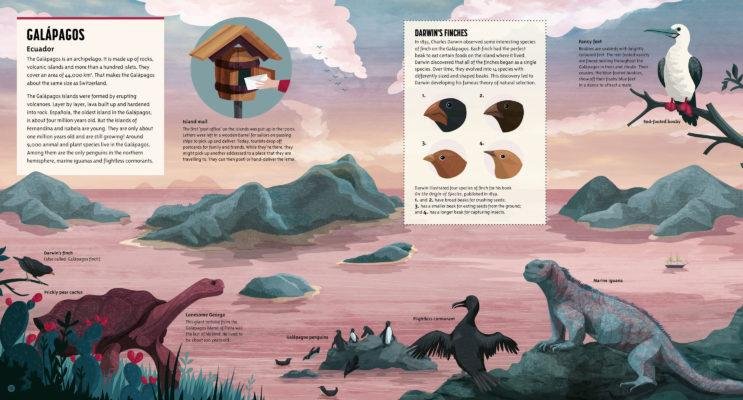
Galápagos finches illustrate how populations can differ in beak shape, feeding behavior, and ecological specialization. Research on these birds has helped scientists investigate natural selection and evolutionary diversification. Differences in beaks alone do not establish that speciation has occurred; researchers also examine genetics, behavior, and reproductive relationships.
Cichlid fishes in African lakes provide examples of remarkable diversification. Differences in feeding niches, habitat, coloration, and mate choice can contribute to reproductive isolation. These fish are especially useful for studying how ecological opportunity and sexual selection interact during evolutionary divergence.
Apple maggot flies, Rhagoletis pomonella, are a classic example of host-associated divergence. Some populations use hawthorn fruits, while others use introduced apples. Differences in host preference and seasonal timing can reduce interbreeding, making the system valuable for studying early stages of reproductive isolation.
These examples illustrate an important principle: speciation is not always a simple story of two populations being physically separated. Ecological specialization, mating behavior, genetics, and environmental conditions can all influence whether populations diverge.
Chemical Speciering: Understanding Different Chemical Forms
The biological interpretation is only one part of the terminology. In environmental chemistry, chemical speciation concerns the different chemical forms in which an element or compound exists in a sample.
An element may be present as a free ion, part of a molecular complex, bound to organic matter, or incorporated into a solid mineral. Each form may behave differently under the same environmental conditions.
Why total concentration is not always enough
Suppose a laboratory detects a particular concentration of a metal in a water sample. That measurement tells researchers how much of the metal is present overall, but it does not necessarily reveal how much is dissolved, chemically bound, readily absorbed by organisms, or likely to move through the environment.
Chemical form can influence:
-
Toxicity: Different forms of the same element can have different biological effects.
-
Mobility: Some forms travel more readily through water or soil.
-
Bioavailability: Certain forms are more accessible to plants, animals, or microorganisms.
-
Persistence: Chemical reactions and environmental conditions affect how long particular forms remain.
-
Treatment effectiveness: Water-treatment or remediation methods may work better on some forms than others.
This is why environmental researchers sometimes need both total-element measurements and detailed chemical-speciation analysis.
Examples of chemical speciation
Mercury: Mercury occurs in multiple chemical forms. Methylmercury is especially important in food-web studies because it can accumulate in aquatic organisms and expose animals and people through contaminated seafood.
Arsenic: Arsenic can occur in different inorganic and organic forms. The relative amounts depend on environmental conditions and biological activity, and the forms can differ substantially in toxicity.
Iron: Iron can exist in different oxidation states, including iron(II) and iron(III). These states influence solubility, chemical reactions, and how iron moves through aquatic and soil environments.
These examples demonstrate why identifying a chemical element is not the same as understanding its environmental behavior. The chemical form often determines which follow-up questions researchers need to ask.
How Scientists Identify and Study Speciering
Studying biological speciation and chemical speciation requires different methods. The correct approach depends on the research question, the material being examined, and the evidence needed to support a conclusion.
Methods used in evolutionary biology
Biologists combine several forms of evidence to determine whether populations are evolving independently or represent distinct species.
-
DNA sequencing: Researchers compare genetic sequences to estimate relatedness and identify differences between populations.
-
Morphological analysis: Physical characteristics, including body structure, coloration, and anatomical features, can help distinguish groups.
-
Behavioral studies: Differences in courtship, communication, or mating preferences may reveal reproductive barriers.
-
Ecological research: Scientists examine habitat preferences, food sources, breeding locations, and environmental adaptations.
-
Reproductive studies: Where appropriate and feasible, researchers investigate whether populations can produce viable, fertile offspring.
No single method answers every question. Two populations may look almost identical while being genetically distinct, whereas visibly different organisms may still belong to the same species.
Methods used in chemical speciation
Chemical researchers may use analytical techniques such as chromatography, mass spectrometry, and spectroscopy to identify chemical forms.
Sample preparation is particularly important. The chemical forms present in a sample can change during collection, storage, transportation, or laboratory processing. A measurement is useful only if the procedure preserves the forms relevant to the research question or accounts for changes that occur.
A well-designed chemical-speciation study therefore considers the detection method, analytical uncertainty, sample conditions, and possible chemical transformations.
Speciering vs. Speciation vs. Classification
These terms are related in some contexts, but they are not interchangeable.
| Term | Main meaning | Example |
|---|---|---|
| Speciering | A term encountered in Swedish scientific terminology and online discussions; interpret according to context | Chemical forms of an element |
| Speciation | The evolutionary formation of new biological species; also used for chemical forms in chemistry | A population diverging into separate species |
| Classification | Organizing items or organisms into groups according to defined criteria | Grouping animals by taxonomic relationships |
| Identification | Determining which organism, substance, or category an observed sample belongs to | Identifying a plant using its characteristics |
| Adaptation | An inherited trait or evolutionary change that improves performance in a particular environment | A beak shape suited to a particular food source |
| Specialization | Becoming adapted to a particular role, resource, or environment | An insect using a specific host plant |
The distinction is practical. Classification organizes information, identification determines what something is, and adaptation describes a relationship between traits and environmental conditions. Biological speciation goes further: it concerns the emergence of distinct evolutionary lineages.
Why Speciering Matters in Biodiversity and Conservation
Understanding speciation helps researchers explain how biodiversity develops and how species respond to environmental change.
Protecting endangered species
Conservation programs depend on accurate knowledge of the populations they are trying to protect. If a population contains a distinct evolutionary lineage, treating it as interchangeable with a more widespread population may overlook important genetic diversity.
Research into species boundaries can help conservationists prioritize habitats, identify vulnerable populations, and make informed decisions about breeding and reintroduction programs.
However, defining a conservation unit requires more than finding a genetic difference. Scientists must consider evolutionary history, population structure, ecology, and the management goals involved.
Understanding habitat fragmentation
Roads, cities, dams, and agricultural expansion can divide habitats into smaller areas. When animals or plants become isolated, gene flow may decline, potentially increasing genetic divergence.
Isolation can sometimes contribute to evolutionary differentiation, but it also carries serious risks. Small populations may lose genetic diversity, suffer from inbreeding, or become more vulnerable to disease and environmental disasters.
Consequently, habitat fragmentation should not be viewed as a beneficial way to produce new species. Conservation priorities generally include maintaining viable populations and ecological connections.
Responding to climate change
As temperatures, rainfall patterns, and habitats change, organisms may shift their ranges or adapt to new conditions. Some populations may become separated, while others move into contact with previously distinct groups.
These changes can affect migration, breeding schedules, ecological relationships, and the likelihood of reproductive isolation. Understanding speciation helps researchers investigate these long-term effects, although predicting exactly when a new species will emerge remains difficult.
Common Misconceptions About Speciering
Unfamiliar terminology can lead to inaccurate explanations. The following distinctions help avoid common mistakes.
Myth 1: Speciering always happens suddenly
Most animal speciation occurs through evolutionary processes extending over many generations. Some mechanisms, particularly chromosome-number changes in plants, can create reproductive isolation much more quickly.
The timescale depends on the organism, its reproductive biology, and the mechanism involved.
Myth 2: Evolution always produces better organisms
Evolution has no predetermined goal. Natural selection favors inherited traits that improve reproductive success under particular conditions, while genetic drift can change populations randomly.
A trait that is useful in one environment may become disadvantageous when conditions change.
Myth 3: Every difference creates a new species
Two organisms can differ in size, color, behavior, or genetic makeup without necessarily belonging to different species. Scientists assess the significance of those differences using appropriate species concepts and multiple lines of evidence.
Myth 4: Biological and chemical speciation are the same process
They share a term but describe different phenomena. Biological speciation involves evolutionary divergence and the formation of species, whereas chemical speciation concerns the forms in which an element or substance exists.
Confusing them can lead to misleading explanations, especially in environmental science.
Myth 5: Speciering has one universally accepted definition
The word appears in different linguistic and online contexts. In English scientific writing, it is usually clearer to use the established term that precisely describes the intended concept.
If a source uses Speciering without defining it, check whether the discussion concerns evolution, chemical analysis, or something else before accepting its explanation.
How to Use Speciering Correctly in Research and Writing
If you encounter Speciering in an article, assignment, or search result, follow these steps to determine what the author means.
-
Identify the subject. References to DNA, populations, evolution, or reproductive isolation suggest a biological context. References to metals, ions, pH, or toxicity suggest chemical speciation.
-
Check the source language. A Swedish scientific document may use speciering as established technical terminology within its discipline.
-
Look for a clear definition. Reliable scientific sources explain the concept and distinguish it from related terms.
-
Verify the evidence. For biological claims, look for genetic, ecological, morphological, or reproductive evidence. For chemical claims, examine analytical methods and chemical conditions.
-
Use precise English terminology. Prefer speciation for the formation of biological species and chemical speciation for the distribution of chemical forms when writing in English.
These steps are useful for students, educators, science communicators, and content writers who need to explain an unusual scientific term without introducing unsupported claims.
Frequently Asked Questions About Speciering
1. What does Speciering mean in simple words?
Speciering is a term encountered in scientific and online contexts, and its meaning depends on how it is used. In evolutionary biology, it is commonly associated with speciation, the process through which new species arise. In chemistry, the corresponding concept concerns the different chemical forms in which an element exists.
The most reliable way to understand the word is to identify the scientific subject and use the established terminology for that field.
2. Is Speciering the same as speciation?
Not in every context. Speciation is the standard English term for the evolutionary formation of new species, while speciering is encountered in Swedish scientific terminology and on websites using the term as a keyword.
In chemistry, speciation also describes the distribution of an element among different chemical forms. Therefore, the correct interpretation depends on the context rather than the spelling alone.
3. What causes biological speciation?
Biological speciation can result from a combination of genetic variation, natural selection, genetic drift, mutation, and reduced gene flow between populations. Geographic barriers may separate populations, but new species can also emerge within the same region.
Over time, these processes may produce reproductive isolation. The exact pathway varies across organisms, and not every isolated or genetically distinct population becomes a separate species.
4. What is chemical speciation, and why is it important?
Chemical speciation describes the different chemical forms of an element within a sample or environment. These forms may differ in toxicity, solubility, mobility, and biological availability.
For example, understanding mercury speciation can help environmental scientists assess how mercury behaves in aquatic ecosystems and how particular forms may enter food webs. Measuring total concentration alone may not provide enough information to evaluate these effects.
5. Why is Speciering important in science?
The underlying concepts help scientists understand differences that matter. Biological speciation explains the development of biodiversity and helps researchers investigate evolution, population relationships, and conservation priorities. Chemical speciation helps researchers understand how substances behave in water, soil, organisms, and other environments.
In both fields, accurate identification improves the quality of research and supports more informed decisions.
Conclusion: Understanding Speciering Through Scientific Context
Speciering is best understood by examining its context rather than assuming that it has one universal definition. Its most relevant scientific connections are biological speciation, which explains how new species arise, and chemical speciation, which describes the different chemical forms of an element.
For students and researchers, the next step is straightforward: identify the field, consult reliable scientific references, and use terminology that matches the evidence. For readers researching Speciering online, this approach separates established science from loosely defined interpretations and makes the subject much easier to understand.
The key takeaway is simple: precision matters more than terminology alone. Once you understand which process a source is describing, you can evaluate its claims, follow the evidence, and apply the concept accurately.
