


Introduction
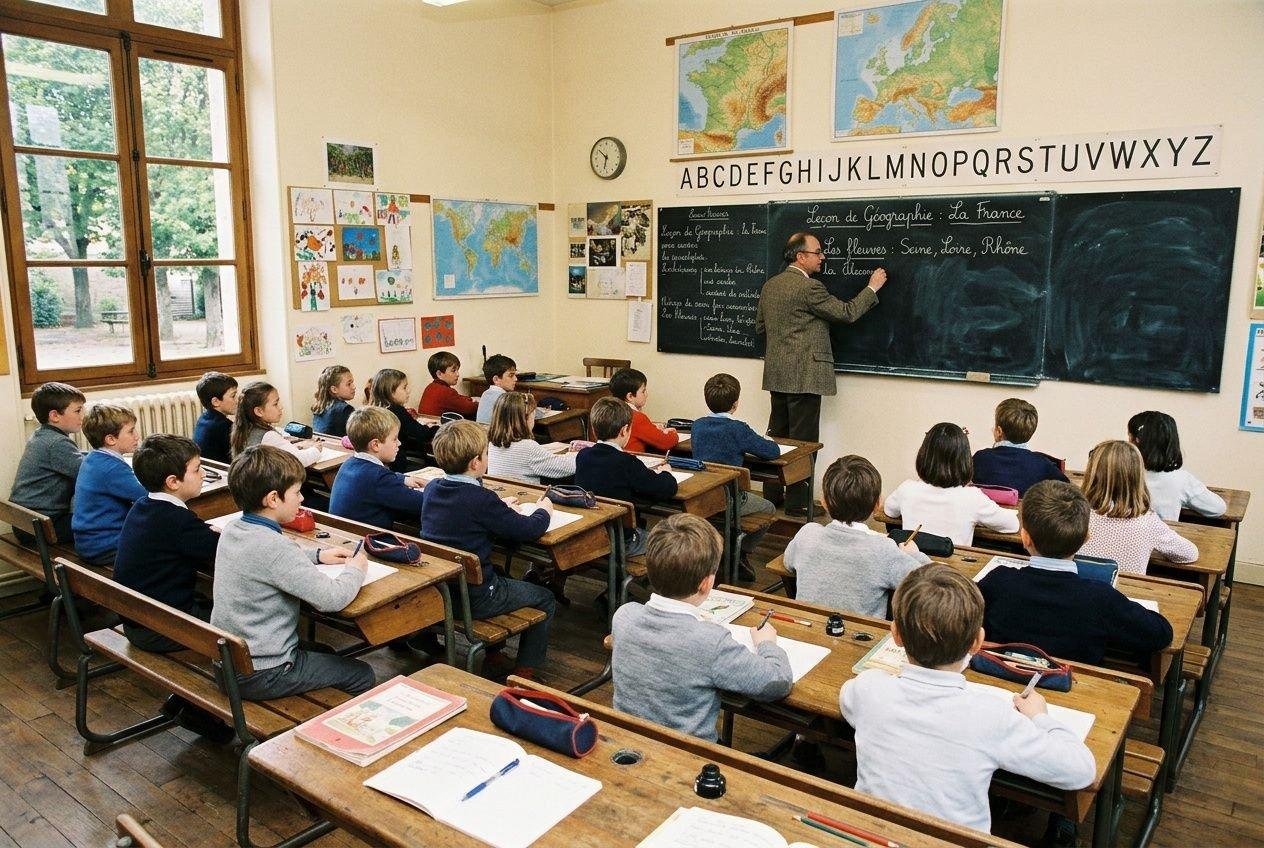
A classroom is more than a room filled with desks, books, and a whiteboard. It is a learning environment where students develop knowledge, strengthen critical-thinking skills, interact with teachers, and learn how to work with others. Whether located in a traditional school, a university, a training center, or an online platform, a classroom provides structure for teaching and learning.
The design and management of a classroom can influence how students participate, communicate, concentrate, and understand new concepts. A well-organized learning space supports different learning needs, encourages curiosity, and helps teachers deliver lessons more effectively. However, creating an effective environment requires more than attractive decorations or modern technology.
Understanding how a classroom works, which types are available, and what makes one successful can help teachers, school administrators, parents, and students make better educational decisions.
What Is a Classroom?
A classroom is a designated space or organized setting where teaching and learning activities take place. It traditionally refers to a physical room in a school or educational institution, but the term also applies to virtual learning environments where students and instructors connect through digital tools.
In a typical classroom, a teacher introduces concepts, explains difficult topics, assigns activities, answers questions, and evaluates student progress. Students listen, discuss ideas, complete assignments, collaborate with classmates, and practice the skills they need for academic and personal development.
A classroom may serve several purposes:
-
Knowledge development: Helping students understand subjects such as mathematics, science, languages, history, and technology.
-
Social interaction: Teaching communication, cooperation, respect, and conflict resolution.
-
Practical learning: Providing opportunities for experiments, presentations, projects, and demonstrations.
-
Personal growth: Building independence, confidence, responsibility, and problem-solving abilities.
-
Assessment and feedback: Allowing teachers to identify learning gaps and guide improvement.
The most effective classrooms combine clear teaching objectives with opportunities for students to participate actively.
Why Is a Classroom Important in Education?
A classroom provides a structured setting in which learners can receive instruction, practice new skills, and receive feedback. It also creates routines that help students understand expectations and manage their time.
A positive classroom environment can support learning in several ways.
1. It Encourages Student Participation
Students often understand difficult concepts more clearly when they can ask questions, discuss examples, and explain their reasoning. An environment where questions are welcomed can help learners participate without feeling embarrassed about making mistakes.
Teachers can encourage participation through group discussions, short quizzes, demonstrations, and open-ended questions rather than relying exclusively on lectures.
2. It Supports Social and Emotional Development
School is an important place for learning how to cooperate with people who have different personalities, abilities, and perspectives. Group assignments and classroom discussions provide opportunities to practice listening, sharing responsibility, and resolving disagreements respectfully.
These skills extend beyond academic achievement. They are useful in higher education, employment, and everyday relationships.
3. It Creates Structure and Consistency
Predictable schedules, clearly explained rules, and organized learning materials reduce unnecessary confusion. When students know what to expect, they can devote more attention to learning activities.
Consistency does not mean every lesson must follow exactly the same format. Teachers can maintain reliable routines while adjusting activities to suit the subject and students’ needs.
4. It Makes Feedback More Useful
Teachers can observe students as they work, identify misunderstandings, and provide guidance before small problems become larger learning gaps.
For example, if several students make the same mistake during a mathematics exercise, the teacher can revisit the concept immediately instead of waiting until the next examination.
Different Types of Classrooms
Not every learning space needs the same arrangement, equipment, or teaching approach. The right classroom setup depends on the students’ age, subject, available resources, lesson objectives, and educational needs.
1. Traditional Classroom
A traditional classroom usually features desks or tables, a teacher’s desk, a whiteboard or blackboard, and printed learning materials. The teacher often leads instruction while students follow explanations, take notes, and complete exercises.
This format can work well for direct instruction, demonstrations, and lessons requiring a shared focus. Teachers can make it more interactive by including discussions, practice questions, peer activities, and regular checks for understanding.
2. Digital Classroom

A digital classroom uses technology such as laptops, tablets, interactive displays, educational applications, and online learning resources. These tools can provide access to videos, simulations, digital assignments, and collaborative projects.
However, technology should serve a clear educational purpose. The U.S. Department of Education’s August 2026 guidance emphasizes instructional value, evidence of learning benefits, transparency, and protection of student information when choosing education technology.
3. Virtual Classroom
A virtual classroom allows teachers and students to connect through the internet instead of sharing a physical room. Depending on the platform, lessons may include live video sessions, recorded lectures, chat discussions, digital whiteboards, quizzes, and file sharing.
This format can make education more accessible to people who live far from educational institutions or need flexible schedules. Its effectiveness nevertheless depends on reliable connectivity, accessible learning materials, appropriate teacher support, and opportunities for meaningful interaction.
4. Inclusive Classroom
An inclusive classroom is designed to help students with different abilities, backgrounds, languages, and learning requirements participate in educational activities. It may use accessible materials, flexible teaching methods, assistive technology, and individualized support.
Inclusion is not simply about placing every learner in the same room. It also requires identifying and removing barriers that prevent students from participating or making progress. UNESCO identifies inclusion and equity as essential foundations of quality education.
5. Collaborative Classroom

A collaborative classroom emphasizes teamwork, peer learning, group discussions, and shared problem-solving. Instead of receiving information passively throughout a lesson, students contribute ideas and learn to explain their reasoning.
Teachers can organize collaborative activities around science experiments, research assignments, presentations, or real-world problems. To prevent a few students from doing all the work, each group should have clear responsibilities and individual learning goals.
6. Montessori and Activity-Based Classroom
A Montessori-inspired classroom generally emphasizes independent exploration, carefully selected learning materials, practical activities, and opportunities for students to work at their own pace. The teacher guides learning rather than directing every action.
Activity-based classrooms use hands-on exercises, demonstrations, games, experiments, and projects to connect concepts with practical experience. These methods can be particularly useful when students need to develop skills through observation, repetition, and active participation.
What Makes an Effective Classroom Environment?
An effective classroom is not necessarily the newest, largest, or most expensive. Its success depends on how well its physical layout, teaching methods, relationships, and routines support learning.
Physical Layout and Organization
The arrangement of furniture affects movement, visibility, communication, and access to learning materials. Teachers should choose a layout that suits the activities students will perform rather than copying a design simply because it looks attractive.
Useful classroom organization practices include:
-
Keeping walkways clear and accessible.
-
Ensuring students can see the board and instructional materials.
-
Placing frequently used resources where students can reach them.
-
Providing suitable lighting and ventilation.
-
Reducing distracting noise where possible.
-
Arranging furniture to support individual work and group activities.
A room used mainly for lectures may benefit from forward-facing desks. A room focused on discussion may work better with small groups or a semicircle.
Positive Classroom Management
Classroom management involves establishing expectations, organizing routines, responding to disruptive behavior, and maintaining a productive learning environment. It works best when rules are clear, fair, age-appropriate, and consistently applied.
Teachers should explain not only what students are expected to do but also why those expectations matter. For example, a rule about allowing classmates to finish speaking reinforces respectful communication rather than merely controlling noise.
A practical classroom management plan includes:
-
Establish a small set of understandable rules.
-
Teach routines for entering class, changing activities, and submitting work.
-
Recognize constructive behavior and effort.
-
Address problems calmly and consistently.
-
Review whether classroom procedures are actually helping students learn.
Teacher-Student Relationships
Students are more likely to ask questions when they believe their teacher will listen respectfully. Positive relationships do not require teachers to abandon boundaries; they require clear expectations alongside fairness, patience, and genuine interest in student progress.
Teachers can strengthen these relationships by learning students’ names, providing specific feedback, offering appropriate choices, and responding to mistakes as opportunities for improvement.
Safe and Respectful Learning Conditions
A supportive classroom should protect students from bullying, humiliation, discrimination, and unnecessary intimidation. Students need to understand that disagreement is acceptable, but personal attacks and exclusion are not.
Schools can reinforce these expectations through reporting procedures, respectful communication policies, consistent responses to bullying, and collaboration with families. The U.S. Department of Education also provides resources for understanding school climate and developing safe, supportive learning environments.
How to Improve Classroom Learning Outcomes
Improving learning requires more than delivering information. Teachers need to identify what students should learn, select suitable activities, assess understanding, and adapt instruction when results show that students need additional support.
Use Active Learning Strategies
Active learning encourages students to work with ideas rather than merely hear or read about them. A lesson can combine short explanations with practice, discussion, problem-solving, and reflection.
For example, during a science lesson about plant growth, students could predict what happens when a plant receives different amounts of light, observe the results, record their findings, and explain their conclusions.
This approach gives teachers opportunities to observe student thinking and identify misconceptions.
Set Clear Learning Objectives
At the beginning of a lesson, students should understand what they are expected to know or do by the end. A useful objective describes an observable outcome rather than a vague intention.
Instead of writing, “Understand fractions,” a teacher might use, “Compare two fractions with different denominators and explain which is larger.”
Clear objectives make it easier to choose activities, measure progress, and provide focused feedback.
Provide Regular Feedback
Feedback should explain what a student has done successfully, what needs improvement, and what action to take next. Simply assigning a score may show performance, but it does not always explain how to improve.
For example, rather than writing “Incorrect” beside a mathematics answer, a teacher can identify the step where the calculation went wrong and ask the student to try that step again.
Adapt Teaching to Different Learning Needs
Students do not all learn at the same speed or arrive with the same prior knowledge. Some may need additional examples, while others are ready for more challenging tasks.
Teachers can offer different levels of practice, visual explanations, reading support, oral responses, and extension activities while maintaining meaningful learning goals. Inclusive instruction should make participation possible without assuming that every student needs an identical approach.
Use Assessment to Guide Instruction
Assessment is most useful when it informs the next teaching decision. A short quiz, exit ticket, class discussion, or observation can reveal whether students are ready to move forward.
Teachers can use the results to decide whether to reteach a concept, provide individual support, organize peer practice, or introduce more advanced material.
The Role of Technology in a Modern Classroom
Technology can expand what teachers and students can do, but its value depends on how it is used. A digital tool should solve a learning problem, not simply add another screen to the room.
Common Classroom Technology Tools
| Tool | Educational purpose |
|---|---|
| Interactive whiteboard | Display diagrams, annotate lessons, and explain concepts visually |
| Learning management system (LMS) | Share resources, collect assignments, and track progress |
| Educational videos | Demonstrate processes and explain complex topics |
| Online quizzes | Check understanding and identify learning gaps |
| Digital libraries | Provide access to books, articles, and reference materials |
| Assistive technology | Help learners access content and communicate their understanding |
A teacher might use a short video to introduce a topic, guide students through a classroom discussion, and then assess understanding with a brief quiz. This sequence keeps technology connected to a specific learning objective.
Challenges of a Digital Classroom
Digital learning also introduces practical concerns. Students may have limited internet access, outdated devices, accessibility barriers, or difficulty concentrating when multiple applications compete for attention.
Privacy deserves particular attention. Schools and educators should check whether digital services are approved for classroom use, what student information they collect, and how that information is stored and shared. The U.S. Department of Education provides guidance on protecting student privacy when using online educational services.
A sensible approach is to use technology selectively, provide non-digital alternatives where necessary, and evaluate whether a tool improves student understanding.
Classroom Challenges and Practical Solutions
Even a carefully planned learning environment can experience difficulties. Recognizing the underlying cause is often more useful than reacting only to the visible problem.
| Common challenge | Practical response |
|---|---|
| Students lose concentration | Break lessons into manageable sections and add short activities |
| Frequent interruptions | Teach clear routines and apply expectations consistently |
| Different achievement levels | Offer guided practice and appropriately challenging tasks |
| Limited classroom resources | Reuse materials, share resources, and prioritize essential learning tools |
| Low participation | Use think-pair-share, anonymous questions, and small-group discussion |
| Bullying or exclusion | Establish reporting procedures and respond consistently |
| Digital distractions | Set device expectations and use technology for defined tasks |
| Overcrowded rooms | Improve movement routes, organize materials, and use clear activity instructions |
These strategies are starting points, not universal solutions. Teachers should consider the age of the students, school policies, available support, and the reasons behind a particular difficulty before deciding what to change.
How to Create a Better Classroom Step by Step
Teachers and school administrators can improve a learning space without necessarily making expensive changes. The key is to identify the most important needs and make improvements that can be evaluated.
Step 1: Identify learning priorities
Decide which skills students need to develop and what currently prevents them from making progress. Gather feedback from students and review recent assessments.
Arrange desks, teaching materials, and activity areas around the lesson requirements. Check visibility, movement, lighting, and accessibility.
Explain classroom rules, transitions between activities, group-work responsibilities, and procedures for requesting help.
Include discussion, individual practice, collaboration, and opportunities for students to explain what they have learned.
Use student work, short assessments, participation patterns, and feedback to determine whether the changes are working. Keep successful practices and revise ineffective ones.
A useful starting point is to make one or two measurable changes rather than redesigning everything at once. For example, a teacher might introduce a five-minute review activity and assess whether more students can answer the lesson’s key questions afterward.
How Classroom Design Affects Different Age Groups
The needs of a classroom change as students grow. A setup suitable for young children may not work equally well for teenagers or adult learners.
Early Childhood and Primary Education
Younger learners often benefit from clear routines, accessible materials, visual instructions, and opportunities for movement. Reading corners, practical learning materials, and supervised activity stations can help connect abstract ideas with concrete experiences.
Teachers should also make instructions short and understandable, allowing children to practice new skills through repetition and guided activities.
Secondary School
Older students often need a balance between direct instruction, independent study, peer discussion, and subject-specific activities. Science classrooms may require laboratory equipment, while language classrooms may benefit from conversation practice and collaborative writing.
At this stage, teachers can also encourage students to evaluate evidence, defend arguments, and take greater responsibility for organizing their learning.
Higher Education and Adult Learning
University students and adult learners may need flexible seating, presentation equipment, collaborative workspaces, and access to digital research materials. Their learning often benefits from connecting theory with practical cases, professional experience, and independent projects.
Regardless of age, classroom design should support the learning objectives rather than follow a single fixed model.
How to Measure Classroom Effectiveness
A classroom may look organized and still fail to meet students’ needs. Evaluation should therefore focus on evidence of learning, participation, and the quality of the learning environment.
Useful indicators include:
-
Learning progress: Are students demonstrating improved understanding and skills?
-
Participation: Do students have meaningful opportunities to contribute?
-
Accessibility: Can learners with different needs use the materials and participate in activities?
-
Classroom climate: Do students report feeling respected and safe?
-
Instructional time: Are routines helping students spend more time learning?
-
Feedback quality: Do students understand how to improve their work?
-
Technology effectiveness: Are digital tools producing a meaningful educational benefit?
Teachers can collect evidence through assessments, student feedback, classroom observations, and reviews of completed work. No single indicator tells the whole story, so decisions should consider several sources of information.
Frequently Asked Questions About Classrooms
1. What is the main purpose of a classroom?
The main purpose of a classroom is to provide an organized environment for teaching, learning, practice, and assessment. It also supports social development by giving students opportunities to communicate, cooperate, solve problems, and learn from different perspectives.
2. What are the different types of classrooms?
Common types include traditional classrooms, digital classrooms, virtual classrooms, inclusive classrooms, collaborative classrooms, and activity-based learning spaces. Each type has different characteristics, and schools can combine several approaches depending on their students, resources, and educational objectives.
3. What makes a classroom effective?
An effective classroom combines clear learning objectives, supportive teacher-student relationships, suitable physical organization, consistent routines, inclusive teaching methods, and regular feedback. Its success should be judged by student learning and participation rather than appearance alone.
4. How can teachers improve classroom management?
Teachers can improve classroom management by setting understandable expectations, establishing consistent routines, giving clear instructions, recognizing constructive behavior, and addressing disruptions fairly. Identifying the reasons behind repeated problems can help teachers choose more effective responses.
5. How does technology improve the classroom?
Technology can make educational content more accessible, support interactive demonstrations, enable online collaboration, and provide additional ways to practice and assess skills. However, devices and applications are most useful when they support specific learning objectives and are used with appropriate attention to accessibility, screen time, and student privacy.
Conclusion
A classroom is much more than a physical space. It is an environment shaped by teaching methods, relationships, organization, technology, and the needs of the people who learn there.
Creating an effective learning environment starts with clear objectives and thoughtful planning. Teachers can build on that foundation by encouraging participation, establishing respectful routines, providing useful feedback, and adapting instruction when students need additional support.
The next step is simple: identify one aspect of your current learning environment that could improve, make a practical change, and evaluate its effect on student understanding and participation. Consistent, evidence-informed improvements can make a classroom more supportive, accessible, and productive over time.
