


The Complete Blueprint to Speciering: Architecting Digital Dominance Through Micro-Niche Ecosystems
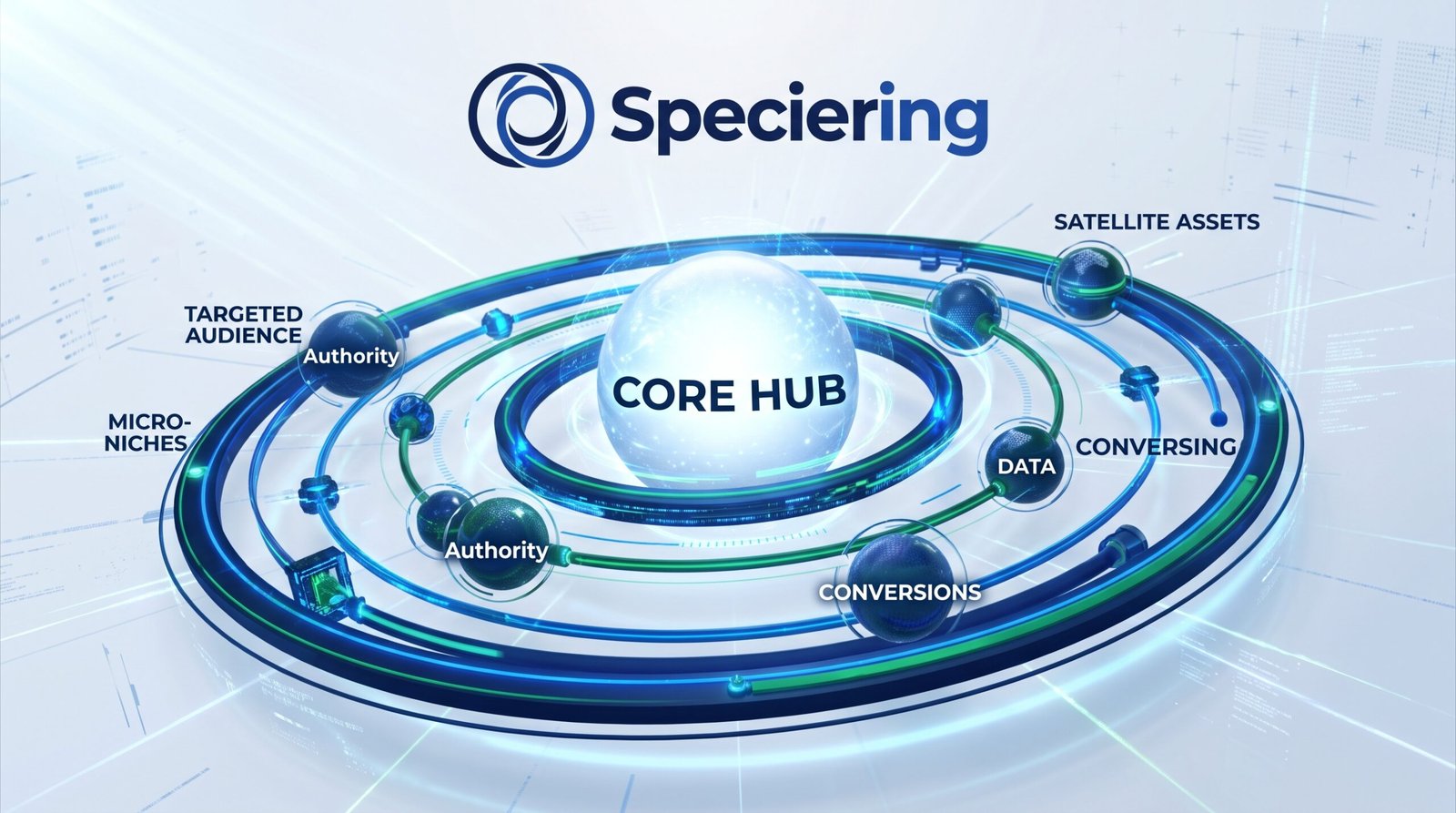
The digital landscape has moved past the era of broad-spectrum targeting. As algorithms become more sophisticated and user intent becomes more fragmented, traditional “cast a wide net” strategies yield diminishing returns. Enter Speciering—an advanced, highly structured methodology focusing on the hyper-categorization and interconnected clustering of niche markets.
By building targeted “rings” of specific, deeply interconnected authority around a core subject, brands and digital marketing entities can dominate their industry sectors with surgical precision. This comprehensive guide breaks down the architecture, implementation, and long-term management of a speciering ecosystem.
Part 1: The Core Architecture of Speciering
Speciering is not merely a linking strategy; it is a holistic approach to asset management, content creation, and market positioning. It relies on building a self-sustaining ecosystem where every digital asset supports and elevates the others within its designated “ring.”
1. The Core Hub (The Anchor)
At the center of every speciering ring is the Core Hub. This is your primary conversion engine or ultimate authority piece. It is typically a comprehensive master guide, an industry-leading software tool, or a primary service page. The Core Hub must be exhaustively detailed and provide definitive value, serving as the gravitational center for all satellite assets.
2. The Satellite Assets (The Ring)
Surrounding the Core Hub is the ring of Satellite Assets. These are highly specific, granular pieces of content, micro-services, or localized pages that address long-tail queries and highly specific user intents.
-
Topical Satellites: Articles or assets diving into a single, narrow aspect of the Core Hub’s topic.
-
Utility Satellites: Calculators, templates, or quick-reference tools that solve a micro-problem.
-
Engagement Satellites: Interactive elements like quizzes, specific case studies, or community polls.
3. The Interconnection Protocol
What separates speciering from a standard “hub and spoke” model is the interconnection. In a speciering model, satellites do not just link back to the core; they link horizontally to each other in a logical, chronological, or topical sequence, creating an unbreakable ring of semantic relevance that search engines and users can continuously navigate without leaving your ecosystem.
Part 2: Traditional Methodologies vs. The Speciering Model
To understand the value of speciering, one must analyze the resource drain associated with traditional digital strategies compared to the focused velocity of ring-building.
| Strategic Element | Traditional Broad Strategy | The Speciering Methodology | Resource Impact |
| Market Focus | General industry keywords, broad audiences | Hyper-specific sub-niches, defined user personas | High initial research, lower long-term cost |
| Asset Structure | Linear or top-down hierarchical (Silos) | Circular and interconnected (Ring-based) | Maximizes page authority distribution |
| Competitive Stance | Competing against massive industry giants | Isolating and dominating micro-markets | Faster path to #1 positioning |
| User Journey | Funnel-based (Top to Bottom) | Ecosystem-based (Continuous internal looping) | Drastically increases site dwell time |
| Conversion Rate | Generally low (1-2%), relying on high traffic volume | Exceptionally high (5-10%), relying on precise intent | Maximizes ROI on lower traffic numbers |
Part 3: Phased Implementation for Digital Ecosystems
Building a speciering ring requires a disciplined, phased rollout. For digital marketing ecosystems and forward-thinking SEO agencies, speciering represents a fundamental shift in client acquisition and ranking strategies. Attempting to build the entire ring simultaneously leads to diluted quality and algorithmic confusion.
Phase 1: Micro-Niche Discovery and Audit
Before building a single asset, you must identify the “vacuum” in your market. Use advanced search listening tools to find high-intent, low-competition sub-topics. You are not looking for keywords with 10,000 searches a month; you are looking for 50 interconnected queries with 200 searches a month that share the exact same user persona.
Phase 2: Core Hub Deployment
Develop the anchor. If you are targeting “Local E-commerce Optimization,” your Core Hub should be the definitive, 5,000-word masterclass on the subject, or a comprehensive service offering page. It must load fast, feature exceptional UX, and contain clear, primary conversion mechanisms.
Phase 3: Satellite Saturation
Begin deploying your satellite assets. For every Core Hub, aim to deploy 8 to 15 highly specific satellite assets.
-
Satellite 1: “Schema Markup for Local E-commerce Stores”
-
Satellite 2: “Managing Inventory Sync for Regional Delivery”
-
Satellite 3: “Local SEO vs. Broad E-commerce: Cost Analysis”
Phase 4: Activating the Ring (Linking)
Once the assets are live, activate the ring.
-
Link every satellite directly to the Core Hub using exact or partial match anchor text.
-
Link Satellite 1 to Satellite 2, Satellite 2 to Satellite 3, and so on, creating a closed loop.
-
Inject dynamic, context-specific call-to-actions within the satellites that push users toward the Core Hub.
Part 4: Advanced Speciering Strategies
Once a primary ring is established and dominating its micro-niche, businesses can begin scaling the methodology.
Multi-Ring Ecosystems (The Constellation Approach)
After dominating one micro-niche, build a second, adjacent Core Hub with its own ring of satellites. Once both rings are mature, you can establish a “bridge link” between the two Core Hubs. This transfers massive, accumulated topical authority from one micro-niche to another, allowing you to dominate broader market sectors over time without ever competing directly for broad, impossible keywords.
Semantic Refresh Cycles
Speciering rings require maintenance to maintain dominance. Implement a quarterly review where satellite assets are updated with new data, ensuring the entire ring remains the most current and accurate ecosystem on the internet for that specific topic.
Part 5: Tracking Speciering Performance Metrics
Standard metrics like “total organic traffic” are insufficient for measuring a speciering campaign. You must measure the health and velocity of the ecosystem itself.
| Advanced Metric | Description | Target Benchmark for Healthy Rings |
| Topical Authority Score | Percentage of the micro-niche queries where your brand appears in the top 3 results. | >85% market saturation |
| Ring Retention Rate | The average number of satellite assets a user interacts with during a single session. | 3.5+ pages per session |
| Index Velocity | The speed at which new satellite assets are indexed and ranked by search engines. | Top 10 positioning within 14 days |
| Hub Conversion Density | The percentage of users arriving at the Core Hub from a satellite who complete a primary action. | 8% – 12% |
Frequently Asked Questions (FAQs)
Q1: How is speciering different from traditional SEO content siloing?
Traditional siloing is strictly hierarchical—sub-pages link up to a parent page, but rarely link horizontally to one another in a comprehensive way. Speciering relies on a circular, interconnected ring model where horizontal linking between satellite assets is just as important as the vertical link to the Core Hub. This creates a self-sustaining loop that traps crawler bots and human users within your ecosystem.
Q2: How long does it take to see results from a speciering campaign?
Because speciering targets micro-niches and highly specific intent, velocity is much faster than broad-market strategies. A properly executed Core Hub and an initial ring of 8-10 satellites can begin dominating a sub-niche and driving high-converting traffic within 45 to 60 days of deployment.
Q3: Do I need a massive budget to implement a speciering strategy?
No. Speciering is actually highly resource-efficient. Instead of spending large budgets trying to compete for highly competitive, broad industry keywords, speciering focuses those resources on dominating smaller, highly specific areas. It requires deep research and quality asset creation, but it is entirely scalable based on your budget.
Q4: Can speciering be applied to local service businesses?
Absolutely. For a local business, the Core Hub might be the primary city service page, and the satellites would be highly specific pages detailing individual neighborhoods, specialized hyper-local services, or localized case studies. The ring model ensures that local relevance is deeply saturated.
Q5: What is the biggest mistake people make when building a speciering ring?
The most common point of failure is breaking the ring’s topical focus. If a satellite asset is created that is too broad or off-topic, it leaks the carefully accumulated authority out of the ring. Every satellite must be strictly contained within the micro-niche defined by the Core Hub.