



Introduction
There’s something almost magical about an old sign leaning against a barn wall, isn’t there? Paint flaking, bolts tired, metal bent just enough to tell you it’s been through a few storms. Most people walk past it. Mike Wolfe stops, squints, and sees a whole life hiding in plain sight.
That’s the charm of the Mike wolfe passion project: it isn’t just about buying antiques or decorating pretty spaces. It’s about rescuing the soul of forgotten things before they disappear for good. Wolfe, best known as the creator and star of American Pickers, has built much of his public identity around searching for “rusty gold” and the stories behind it. HISTORY describes him as someone who has been hunting hidden treasure since childhood and who sees beauty in long-lost objects others might overlook.
But here’s the kicker: the real story doesn’t end with a television camera or a handshake beside a dusty shed. It keeps rolling down two-lane roads, into old downtowns, empty storefronts, tired brick buildings, and small communities that still have a pulse. Wolfe’s deeper work points toward preservation, adaptive reuse, and the simple belief that America’s ordinary places are anything but ordinary.
And honestly? That’s a story worth slowing down for.
Why Mike Wolfe’s Work Feels Bigger Than Television
Television made Mike Wolfe famous, sure. Yet fame alone doesn’t explain why people keep paying attention to his work. The reason is more human than that. Folks can feel when someone truly loves what they’re doing. Wolfe’s public projects often carry the same fingerprints: old motorcycles, hand-painted signs, worn wood, historic buildings, and a strong sense that objects should be lived with, not sealed away like museum ghosts.
On American Pickers, Wolfe built a career by traveling across the country in search of antiques, collectibles, and personal histories. HISTORY notes that the people he meets and the tales they tell are as important to the journey as the finds themselves. That matters because it changes the whole meaning of “picking.” It’s not just commerce. It’s listening.
The Picker’s Eye
The picker’s eye is a funny thing. To one person, an old gas pump is junk. To another, it’s a sculpture from the age of open roads. To Wolfe, it’s often both: a collectible and a doorway into memory.
A rusty motorcycle tank might whisper about weekend rides. A faded café sign might bring back the smell of black coffee and biscuits. Sitting in a corner, covered in dust, these things still talk. You just have to lean in.
That’s why Wolfe’s work feels emotional. He doesn’t present old objects as dead things. He treats them like characters. Scratched, stubborn, half-broken characters, maybe, but characters all the same.
Small Towns, Big Souls
One of the strongest threads in Wolfe’s public work is his affection for Main Streets. The National Trust for Historic Preservation once featured him in a conversation about preservation, where he spoke about the importance of rural downtowns and the ripple effect created by architecture, specialty shops, and walkable community life.
That idea is powerful because small-town preservation isn’t only about buildings. It’s about rhythm. It’s about the barber opening early, the café light glowing before sunrise, the courthouse clock marking time, and neighbors waving across the square. Lose those places, and you don’t just lose bricks. You lose belonging.
Mike wolfe passion project and the Beauty of Saving What Others Miss
The phrase Mike wolfe passion project feels fitting because his work seems driven by a personal itch that won’t go away. He’s drawn to what’s overlooked: old bikes, weathered signs, historic buildings, forgotten streets. And, let’s be real, overlooked things often need the most imagination.
From Barn Finds to Building Finds
At first glance, picking and historic restoration might seem like different worlds. One happens in barns and sheds; the other happens on Main Street. But they’re cousins. Both begin with the same question: “What could this become if someone cared enough?”
Wolfe’s interest in preservation has extended beyond individual antiques into old properties and community spaces. His Two Lanes Guesthouse in Columbia, Tennessee, is a good example. Antique Archaeology describes it as a Main Street loft vacation rental where fans can see items Wolfe picked from barns and sheds displayed as décor.
In other words, the objects didn’t just get saved. They got a second act.
Why Rust Still Matters
Rust is usually treated like a warning sign. It says, “This thing is old.” It says, “This thing may not last.” But in Wolfe’s world, rust can also say, “This thing survived.”
That’s a lovely shift, isn’t it? Instead of chasing the shiny and new, this approach honors the scarred and sturdy. The worn edges become proof of use. The dents become punctuation. The patina becomes a kind of poetry, rough around the edges but full of truth.
And maybe that’s why people connect with it. We’re all a little weathered. We’ve all got a few scratches. Seeing beauty in old things reminds us that age doesn’t cancel value.
Columbia, Tennessee: A Living Canvas
Columbia, Tennessee, has become one of the most visible settings for Wolfe’s preservation-minded projects. The Two Lanes Guesthouse sits in historic downtown Columbia, and Visit Columbia identifies it as a one-bedroom loft above a bicycle shop in a two-story brick building dating back to 1857.
That detail matters. A building from 1857 isn’t just real estate. It has seen generations pass by its windows. It has watched horses give way to cars, handwritten ledgers give way to smartphones, and quiet streets become destinations again.
A Guesthouse With a Heartbeat
The Two Lanes Guesthouse isn’t designed like a blank hotel room, and thank goodness for that. According to Antique Archaeology, Wolfe wanted the space to create an experience for visitors spending a long weekend in Columbia, not merely a place to sleep for a few hours.
That’s the difference between lodging and storytelling.
Inside, picked objects become part of daily life. A vintage sign isn’t just hanging there to look cool. It points to a road trip, a negotiation, a memory, a dusty afternoon when someone decided it was worth saving. The room becomes a scrapbook you can walk through.
The Main Street Effect
A restored building can do something sneaky and wonderful. It can make people curious. One improved storefront encourages another. A guesthouse brings visitors. Visitors buy coffee, browse shops, take photos, tell friends, and maybe come back.
Antique Archaeology describes the mission of Two Lanes Guesthouse as drawing people back onto Main Streets and helping guests appreciate why those places deserve support. That’s not a small goal. It’s a quiet form of economic and cultural repair.
The Creative Philosophy Behind the Project
Wolfe’s creative philosophy seems to rest on one big idea: old things don’t need to be perfect to be meaningful.
That’s a refreshing message in a world obsessed with upgrades. Newer, faster, cleaner, sleeker — we hear it all day. Yet an old wooden sign with chipped paint can stop people in their tracks. Why? Because it feels honest. It wasn’t manufactured to be nostalgic. It earned that feeling the hard way.
Story First, Profit Second
Of course, restoration projects and antiques can have business value. Nobody’s pretending otherwise. But when story leads, profit tends to follow in a healthier way. People don’t just buy a product or book a stay. They buy into a feeling.
Here are a few elements that make the approach work:
- Authenticity: The objects feel lived-in, not staged.
- Place-based identity: The setting matters as much as the décor.
- Community connection: Local streets, shops, and buildings become part of the experience.
- Emotional design: Every item seems to invite a question.
- Respect for age: Imperfection becomes a feature, not a flaw.
Imperfect Things Make Perfect Memories
Picture this: you walk into a room, and there’s an old Vespa parked where a boring accent chair might have been. Unexpected? Absolutely. But that’s the point. Visit Columbia notes that the Two Lanes Guesthouse includes a mint green 1951 Vespa as a highly photographable feature.
That kind of detail sticks. People remember it because it breaks the pattern. And in design, as in life, pattern-breaking moments often become the best stories.
What Entrepreneurs Can Learn From the Journey
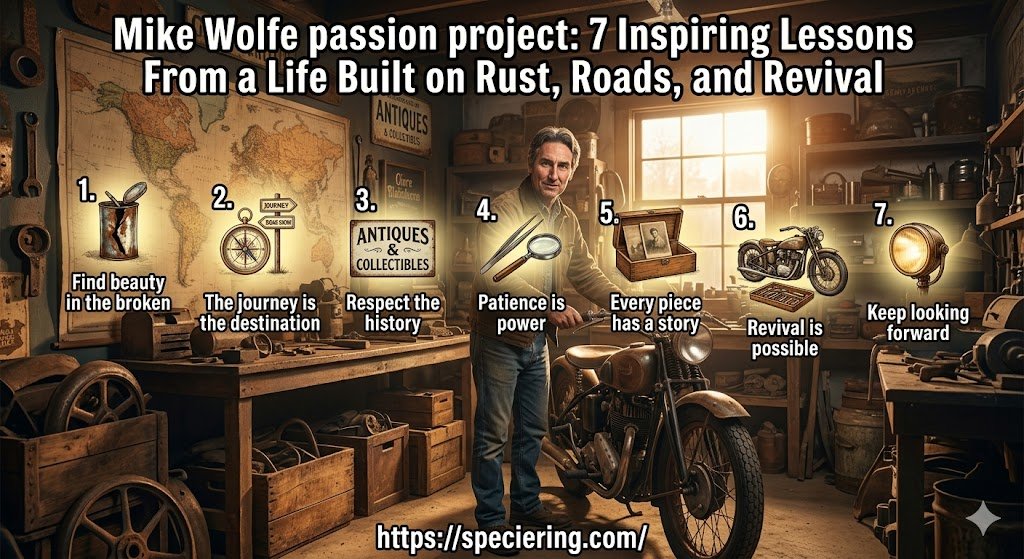
The Mike wolfe passion project offers more than a feel-good preservation story. It also gives entrepreneurs, creators, designers, and dreamers a useful roadmap. Not a stiff corporate roadmap, mind you. More like a wrinkled paper map from a glove box, coffee-stained and better for it.
7 Lessons From the Road
- Look where others don’t.
Opportunities often hide in places people dismiss. Old buildings, forgotten products, neglected neighborhoods, and unusual ideas can hold surprising value. - Tell the story, not just the specs.
A chair is a chair until you know it came from a 1920s hotel lobby. Story turns objects into emotional experiences. - Respect the roots.
Whether you’re restoring a storefront or building a brand, don’t erase what made it special in the first place. - Make nostalgia useful.
Nostalgia works best when it’s not frozen. Bring old things into modern life so people can touch, use, and enjoy them. - Build for community.
A good project doesn’t only benefit its owner. It gives people a reason to gather, walk, shop, talk, and care. - Let imperfection breathe.
Too much polish can remove the soul. Sometimes the crack in the leather or the fade in the paint is exactly what makes something beautiful. - Stay curious.
Curiosity is the engine. Without it, picking becomes shopping, restoration becomes construction, and storytelling becomes marketing fluff.
Why This Story Resonates So Deeply
There’s a reason people love stories about restoration. Deep down, we want to believe things can be saved. A town can come back. A building can glow again. A rusty sign can become art. A road can lead somewhere surprising.
Wolfe’s work taps into that hope without getting syrupy about it. It says, “Hey, this old thing still has a chance.” And really, who doesn’t want to hear that?
Modern life moves fast. Too fast, sometimes. We replace things before we understand them. We scroll past history, knock down buildings, and call it progress. But preservation asks us to pause. It asks us to notice the hand-painted letters, the old brick, the family-run shop, the worn-out counter where hundreds of elbows once rested.
Dangling from the rafters, covered in dust, waiting for somebody with vision — that’s where some of the best stories begin.
FAQs
What is Mike Wolfe best known for?
Mike Wolfe is best known as the creator and star of American Pickers, a HISTORY Channel series centered on finding antiques, collectibles, and the stories behind them across America.
What makes his preservation work different?
His work blends antiques, design, travel, and historic preservation. Instead of treating old objects as simple collectibles, he often uses them to create spaces that feel personal, memorable, and connected to local history.
Where is Two Lanes Guesthouse located?
Two Lanes Guesthouse is located in downtown Columbia, Tennessee, at 11 Public Square, according to Visit Columbia.
Can visitors stay at Two Lanes Guesthouse?
Yes. Antique Archaeology describes Two Lanes Guesthouse as a Main Street loft vacation rental open to the public in Columbia, Tennessee.
Why does Mike Wolfe focus on small towns?
Wolfe has publicly emphasized the importance of Main Streets and rural downtowns. In his National Trust interview, he connected historic downtowns with community identity, business activity, and the roots of American life.
Is this project only about antiques?
No. Antiques are a major part of the story, but the larger theme is preservation. It includes saving objects, restoring buildings, encouraging travel to small towns, and helping people see beauty in overlooked places.
What can creators learn from Wolfe’s approach?
Creators can learn to value authenticity, tell stronger stories, reuse what already exists, and build experiences that feel human instead of generic. In plain English: don’t chase shiny trends when the good stuff may already be sitting in the corner.
Conclusion
At its heart, Mike Wolfe’s preservation-minded work is a reminder that old things still have something to say. The busted sign, the brick storefront, the vintage bike, the sleepy Main Street — none of them are finished just because they’re worn.
That’s the beauty of the whole thing. It’s not about pretending the past was perfect. It’s about carrying forward the pieces that still matter.
And maybe that’s why this story lands so well. In a noisy world, it feels grounded. In a disposable culture, it feels careful. In towns where people sometimes wonder what comes next, it points to what’s already there and says, “Start here.”
Not bad for a little rust, huh?
