


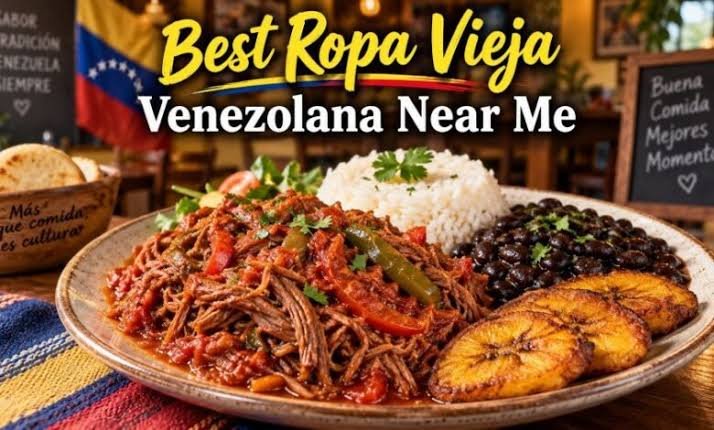
Looking for the best ropa vieja venezolana near me? Start by searching for both “ropa vieja venezolana” and “carne mechada” because Venezuelan restaurants commonly use the second name for this shredded-beef preparation. The best versions feature tender strands of beef, a deeply cooked onion-and-pepper sofrito, balanced seasoning, and enough sauce to keep the meat juicy without turning it into a watery stew.
If you are ordering it for the first time, there is another useful clue: look for pabellón criollo or an arepa filled with carne mechada on the menu. Those dishes reveal whether a restaurant actually serves the Venezuelan style you are searching for.
What Is Venezuelan Ropa Vieja?
In Venezuela, what many international diners call ropa vieja is more commonly known as carne mechada or carne desmechada. It consists of beef that is cooked until tender, pulled into strands, and then simmered again with a seasoned vegetable base.
The terminology matters because “ropa vieja” describes several related dishes throughout Latin America and the Caribbean. Cuba, Panama, and other countries have their own versions, while Venezuela traditionally identifies its preparation as carne mechada.
A good Venezuelan version is built around texture.
The beef should separate into recognizable strands rather than appearing as chopped cubes. Flank or skirt steak is commonly associated with the preparation because these cuts can produce long, fibrous shreds after slow cooking. Chuck can also work well because of its connective tissue and fat content.
The second component is the sofrito.
Onion, peppers, garlic, tomato, and seasonings are cooked together before the shredded beef returns to the pan. This second cooking stage allows the meat to absorb the aromatic sauce instead of simply having sauce poured over it.
Why Searching for “Ropa Vieja” Can Be Confusing
A search for best ropa vieja venezolana near me can produce restaurants serving several different interpretations of shredded beef.
That is because the name crosses national culinary traditions.
| Search term | Common association | What you may receive |
|---|---|---|
| Ropa vieja | Cuba and other Caribbean cuisines | Shredded beef with a tomato-based sauce and regional seasonings |
| Carne mechada | Venezuela | Shredded beef cooked with sofrito and spices |
| Carne desmechada | Colombia and Venezuela | Seasoned shredded beef with regional variations |
| Pabellón criollo | Venezuela | Carne mechada served with rice, black beans and fried plantains |
| Arepa de carne mechada | Venezuela | Venezuelan arepa filled with shredded beef |
| Arepa pelúa | Venezuela | Arepa filled with carne mechada and yellow cheese |
These distinctions are useful when searching restaurant menus because a business may offer the dish without using the exact phrase you typed into Google.
In Venezuela, carne mechada is particularly associated with pabellón criollo, where it is served alongside white rice, black beans, and fried plantains. It is also widely used as a filling for arepas and other dishes.
How to Find the Best Ropa Vieja Venezolana Near Me
Finding an authentic version is less about choosing the first restaurant in a search result and more about knowing what to look for.
1. Search for “carne mechada” too
This is the single most useful adjustment.
Try searches such as:
- best ropa vieja venezolana near me
- Venezuelan carne mechada near me
- carne mechada restaurant
- Venezuelan restaurant near me
- Venezuelan arepas with carne mechada
- pabellón criollo near me
- Venezuelan shredded beef near me
The word “Venezuelan” helps narrow the results, while “carne mechada” aligns with the name commonly used in Venezuela.
2. Check the actual menu
A restaurant calling itself Latin American does not necessarily specialize in Venezuelan cuisine.
Look for recognizable Venezuelan dishes such as pabellón criollo, arepas, empanadas, cachapas, tequeños, and carne mechada.
A menu containing several of these items gives you more context than a single listing that simply says “ropa vieja.”
3. Read recent customer reviews
Reviews can reveal details that a menu leaves out.
Pay attention to comments describing:
- Tenderness of the beef
- Amount of meat in an arepa
- Freshness of the food
- Flavor of the sofrito
- Portion size
- Balance of salt and spices
- Whether the meat was dry or juicy
- Quality of the accompanying rice, beans, or plantains
Recent reviews are particularly useful because restaurant menus and kitchen practices can change.
4. Look at food photographs
Photos can help identify whether the meat has the expected shredded texture.
You want to see long or medium strands of beef coated in a concentrated sauce, rather than large chunks floating in liquid.
A photograph of pabellón criollo can be especially informative because it shows how the meat is served with the traditional sides.
What Authentic Venezuelan Carne Mechada Should Taste Like
The best ropa vieja venezolana near me should not taste like plain boiled beef.
The initial cooking softens the meat, but the second stage creates much of the final character.
The shredded beef is combined with a sofrito containing ingredients such as onion, bell pepper, garlic, and tomato. Depending on the cook or family tradition, seasonings can include cumin, black pepper, paprika or other regional spices.
The texture comes first
Properly cooked beef should be tender enough to pull apart easily.
If the meat is rubbery, the cooking process probably has not gone far enough. If it has been chopped into tiny fragments, the distinctive strand-like texture is harder to appreciate.
The sauce should cling to the beef
A strong version has enough cooking liquid to keep the meat moist, but the finished mixture should not resemble soup.
The sauce should coat the strands.
That balance is one of the easiest ways to distinguish carefully prepared shredded beef from meat that has simply been boiled and mixed with a quick sauce.
The sofrito should taste developed
Raw onion or sharp tomato flavor can indicate that the aromatic base was rushed.
Slowly cooking the vegetables allows sweetness and depth to develop before the beef is added.
Best Ropa Vieja Venezolana Near Me: What Should You Order?
If you find a Venezuelan restaurant with several relevant dishes, there are a few smart ways to experience the meat.
Pabellón Criollo
This is the classic full-plate option.
The meat is served with white rice, black beans, and fried plantains, creating a combination of salty, savory, sweet, creamy, and crisp elements. The shredded beef is the central protein component.
For someone trying Venezuelan cuisine for the first time, this format provides more context than ordering the meat by itself.
Arepa With Carne Mechada
An arepa turns the shredded beef into a handheld meal.
The corn-based shell provides a neutral, slightly toasted foundation for the seasoned meat. Some Venezuelan preparations pair carne mechada with yellow cheese, producing the combination commonly called an arepa pelúa.
This is an excellent option if you want to judge the meat itself because the filling remains the focus.
Empanada With Carne Mechada
Carne mechada can also be used as an empanada filling.
The contrast is different: crisp fried dough surrounds the tender meat, producing a richer and more portable dish.
Ask whether the restaurant prepares the filling fresh or uses the same meat prepared for its main dishes.
Ropa Vieja vs. Carne Mechada: Are They the Same?
They are closely related, but the names should not automatically be treated as identical.
The term ropa vieja is used across several Spanish-speaking regions. Cuba has a particularly well-known version, while Venezuela generally calls its shredded-beef preparation carne mechada.
The underlying idea is similar: beef is cooked until tender, shredded, and combined with a seasoned sauce.
The details vary.
A Venezuelan diner searching for the best ropa vieja venezolana near me should therefore check whether a restaurant identifies the dish as Venezuelan carne mechada rather than assuming every ropa vieja on a menu represents the same culinary tradition.
That small distinction can save you from ordering an entirely different regional preparation.
How the Beef Is Traditionally Prepared
The cooking process explains why a good plate takes time.
Step 1: Choose a suitable cut
Flank steak is a common choice because its grain creates substantial strands after cooking. Skirt steak and chuck can also be used.
Step 2: Cook until tender
The beef is simmered or braised until the connective tissue softens and the meat can be pulled apart.
This is not a fast-cooking preparation.
Step 3: Reserve the cooking liquid
The broth contains flavor extracted from the beef and aromatics.
Discarding it wastes an important component of the final sauce.
Step 4: Shred the beef
Forks or hands can be used to separate the meat into strands.
The objective is shredded rather than minced beef.
Step 5: Build the sofrito
Onion, pepper, garlic, tomato, and seasonings are cooked together until their flavors become integrated.
Step 6: Return the beef to the sauce
The shredded meat goes back into the pan so it can absorb the sofrito and cooking juices.
Step 7: Reduce carefully
Excess liquid is reduced while the meat remains moist.
This final stage creates the concentrated flavor associated with well-made carne mechada.
Signs of a High-Quality Restaurant Version
When you are evaluating the best ropa vieja venezolana near me, use these practical checks.
1. The beef pulls apart easily.
Tenderness is fundamental.
2. The strands remain visible.
You should be able to recognize shredded beef rather than a minced-meat texture.
3. The sauce is concentrated.
It should coat the meat instead of flooding the plate.
4. The seasoning is balanced.
Cumin, pepper, garlic, and vegetables should support the beef rather than overpower it.
5. The meat remains moist.
Over-reduced beef can become dry and stringy.
6. The restaurant understands Venezuelan terminology.
A menu featuring carne mechada, pabellón criollo, and arepas provides useful context.
7. The side dishes are properly prepared.
Good black beans, rice, and plantains can make a major difference when ordering pabellón.
Why Pabellón Criollo Is Such a Useful Test
Pabellón criollo brings several elements together on one plate.
The white rice is relatively mild. Black beans provide earthy richness. Fried ripe plantains introduce sweetness. Carne mechada contributes the savory, aromatic center.
This combination makes flaws easier to notice.
If the beef is dry, the contrast becomes obvious. If the beans are bland, the plate loses depth. If the plantains are under-ripe, they may lack the sweetness expected from the traditional combination.
For that reason, pabellón criollo is often a more informative order than shredded beef by itself when you are evaluating a Venezuelan restaurant for the first time.
Search Tips for Different Locations
The “near me” part of the query is inherently location-dependent.
A restaurant that is ideal for someone in Miami may be completely irrelevant to someone in Houston, Madrid, London, or another city.
Use the city name when Google returns too many unrelated results.
For example:
- Search Venezuelan carne mechada + your city.
- Open several restaurant profiles.
- Check whether carne mechada or pabellón appears on the current menu.
- Review recent customer photographs.
- Compare recent reviews rather than relying exclusively on an overall rating.
- Confirm today’s opening hours before traveling.
- Call ahead if the dish is not listed online.
That final step matters because specialty dishes can sell out or appear only on certain menus.
What to Ask Before Ordering
If the menu is unclear, a short question to the restaurant can save time.
Ask:
“Is your carne mechada Venezuelan-style, and do you serve it with pabellón criollo or in arepas?”
A restaurant familiar with Venezuelan cuisine should understand the terminology.
You can also ask whether the meat is prepared fresh daily, what cut is used, and whether the dish contains any ingredients you need to avoid.
Homemade Ropa Vieja Venezolana: What to Look For
If you are comparing restaurant food with a homemade version, focus on technique rather than presentation.
Traditional preparations can differ considerably between families.
Some cooks use more tomato. Others emphasize peppers and onion. Seasoning levels vary too.
A Venezuelan recipe source describes carne mechada as beef cooked until it falls into threads, then shredded and cooked again in a sofrito of onion, red pepper, and tomato with seasonings such as cumin and Worcestershire sauce.
Another Venezuelan preparation uses flank steak with onion, tomato, red pepper, garlic, cumin, paprika, and Worcestershire sauce before combining the finished meat with arepas.
Those variations are normal.
Authenticity does not require every family recipe to taste identical.
Common Mistakes When Ordering
There are several easy mistakes when searching for this dish.
Mistake 1: Searching only “ropa vieja”
This can return Cuban, Panamanian, Costa Rican, or other regional preparations.
Add Venezuelan or carne mechada to narrow the search.
Mistake 2: Judging the dish by color alone
Dark or bright meat does not automatically indicate quality.
Taste, texture, moisture, and seasoning matter more.
Mistake 3: Expecting every Venezuelan restaurant to use “ropa vieja”
The restaurant may list the dish as carne mechada instead.
Mistake 4: Ignoring the sides
Rice, black beans, and plantains are part of the classic pabellón experience, so the quality of those components matters.
Mistake 5: Choosing an outdated listing
Menus and operating hours change.
Check the restaurant’s current profile or website before making a trip.
Best Ropa Vieja Venezolana Near Me: Quick Decision Guide
If you want a simple method, use this checklist:
| What to check | What you’re looking for |
|---|---|
| Restaurant type | Venezuelan or Venezuelan-focused Latin American restaurant |
| Menu name | Carne mechada, carne desmechada, or Venezuelan ropa vieja |
| Beef texture | Tender, distinct shredded strands |
| Sauce | Concentrated sofrito that coats the meat |
| Aromatics | Onion, pepper, garlic and tomato |
| Seasoning | Balanced cumin and other spices |
| Classic plate | Pabellón criollo |
| Arepa option | Carne mechada filling |
| Cheese pairing | Yellow cheese in an arepa pelúa |
| Reviews | Recent comments about flavor and tenderness |
| Photos | Visible shredded beef rather than chunks |
| Availability | Confirm before visiting |
Frequently Asked Questions
1. What is the Venezuelan version of ropa vieja called?
The Venezuelan preparation is generally called carne mechada or carne desmechada. It is shredded beef cooked with a seasoned sofrito and is strongly associated with pabellón criollo and Venezuelan arepas.
2. What is the best way to search for Venezuelan ropa vieja near me?
Search for both “best ropa vieja venezolana near me” and “Venezuelan carne mechada near me.” The second phrase can be particularly useful because carne mechada is the common Venezuelan name for the dish.
3. What is carne mechada served with in Venezuela?
One of its best-known presentations is pabellón criollo, served with white rice, black beans, and fried plantains. Carne mechada is also used as an arepa filling and can appear in other Venezuelan dishes.
4. Is Venezuelan ropa vieja the same as Cuban ropa vieja?
They share the basic idea of tender shredded beef, but they are regional preparations with different culinary traditions and terminology. Venezuela commonly uses the name carne mechada, while ropa vieja is strongly associated with Cuba and is also used elsewhere in the Spanish-speaking Caribbean.
5. What should authentic Venezuelan carne mechada taste like?
It should be tender, savory, aromatic, and moist, with shredded beef coated in a cooked sofrito. Onion, peppers, garlic, tomato, cumin, and other seasonings may contribute to the flavor, while the exact recipe varies between cooks and restaurants.
Expert Verdict: How to Make the Right Choice
The smartest way to find the best ropa vieja venezolana near me is to search beyond the exact phrase.
Look for Venezuelan carne mechada, then verify the restaurant’s menu, recent reviews, photographs, and location. If the menu offers pabellón criollo or an arepa filled with carne mechada, you have a stronger indication that the kitchen is working within the Venezuelan culinary tradition.
When the plate arrives, judge the fundamentals.
The beef should be tender. The strands should be distinct. The sofrito should be developed. The sauce should cling to the meat.
For the fullest introduction, order pabellón criollo. For a more focused test of the shredded beef, try a carne mechada arepa.
And remember the most useful search-language trick: if “ropa vieja” gives you too many unrelated results, switch to “carne mechada.” That single change can make a local search much more relevant to the Venezuelan dish you actually want.
